Suzie Imber on what climbing the world’s toughest mountains teaches about resilience
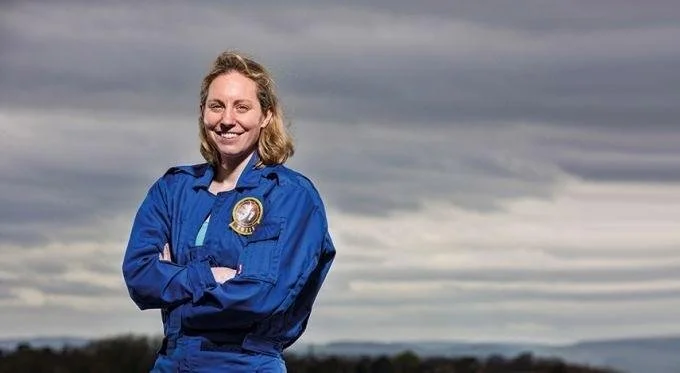
Dr Suzie Imber is a planetary scientist, explorer and mountaineer whose career bridges scientific research and extreme exploration.
A Professor of Planetary Science at the University of Leicester, her work focuses on space weather and how solar activity affects planets across our solar system.
Through both her research and public speaking, she has become one of the most respected aerospace & astronaut speakers, sharing insights on exploration, resilience and scientific discovery.
Alongside her academic career, Suzie gained international recognition after winning the BBC Two series Astronauts: Do You Have What It Takes?, where candidates were put through astronaut-style testing led by former International Space Station commander Chris Hadfield.
She is also an experienced mountaineer who has climbed in some of the world’s most challenging environments, including the Himalayas, the Andes and Alaska.
In this exclusive interview with the High Performance Speakers Agency, Suzie Imber reflects on the physical demands of mountaineering, the environmental changes she has witnessed during expeditions, and the mindset required to pursue ambitious goals in both exploration and science.
Q1. You’ve climbed in some of the world’s most extreme environments, from Alaska to the Himalayas. How do you physically prepare for the very different challenges each mountain range presents?
Dr Suzie Imber: “The physical challenges that you face in the mountains depend very much on where you are.
“For example, I have climbed in the Himalayas, the Andes and Alaska. In Alaska, the main challenges are associated with the extreme cold and the fact that the ice starts so low, so you are sleeping on ice right from the bottom of the mountain ranges.
“If you want to go climbing and have to walk into a mountain, you are going to be pulling a sledge. That sledge is likely to weigh close to the same weight as the person pulling it.
“To train for that, when I was living in Leicester, I had a harness with three car tyres attached to the back of it. I would drag these tyres around the park in Leicester for hours, practising what it would feel like and using the muscles that I would need to pull that sledge.
“Other mountain ranges, like the Himalayas or the Andes, are different. The snow starts much higher, so there is less pulling of sledges but much more weight in a rucksack.
“For those, I wear my rucksack, fill it with bottles of water and go for really long hikes carrying them.
“I learned an important lesson there. The first time I did it, I filled the bag with books, the complete works of William Shakespeare and the Oxford English Dictionary, to make it heavy.
“But it turns out I am really attached to those books, and when it got difficult, I could not just ditch them. If you fill it with water, you can always pour it out halfway if you find you are struggling.
“So lesson learned there.
“In general, though, it requires very high levels of fitness. Good routines of cardiovascular exercise are essential. Your lung and heart health have to be a priority, so you try to stay healthy.”
READ MORE: You can’t outgrow ambition: Helen Glover on gold, grit and going again

Q2. During your expeditions, you have spent years returning to the same remote landscapes. When have you most clearly seen the effects of climate change in those environments?
Dr Suzie Imber: “In the Andes, we tend to return to the same regions multiple times and use the same access routes. Over ten or fifteen years of visiting the same places and taking similar photographs, we can physically see glaciers retreating towards the tops of the mountains.
“A mountain we climbed required us to ascend the third-highest waterfall in Chile to gain access to a very remote and technical mountain.
“When we reached the top of the waterfall, we found the remains of a glaciology station that had been set up decades earlier. Scientists had taken equipment there by helicopter and had been monitoring the glacier.
“From the point where they left their equipment all those decades ago, we could no longer see the glacier. It had retreated out of sight up the mountain.
“Experiences like that leave a haunting feeling of something lost.”
Q3. Mountaineering expeditions can take months of planning and endurance. What drives your motivation when facing such demanding goals?
Dr Suzie Imber: “I am really goal-oriented, so if you give me a task, that is what I focus on and want to achieve.
“Mountaineering is great for me in that sense because there is always a series of goals. If I am climbing multiple mountains in one expedition, those goals follow one after another.
“It is easy to focus on the summit, although that can be dangerous because if you are too focused on the summit, you may be less likely to turn back when you need to.
“In terms of motivation, I do not struggle too much with it because I am internally motivated.
“People tend to be either internally or externally motivated, and that affects their behaviour. You might climb a famous mountain that everyone has heard of, which works well if you are externally motivated because people recognise it.
“If you are internally motivated, you may climb mountains that nobody has heard of and nobody ever will hear of. That is fine for me because I am not doing it for praise or recognition.
“It is about the goals we set ourselves.
“We also create lists of mountains that meet certain criteria, just for fun. As you approach the end of a challenging list, that can become very motivating.
“For example, I have climbed eleven of the twelve highest mountains in the Mendoza region of South America. Only one person has ever climbed all twelve, and I have completed eleven.
“When you get close to the end of a list like that, even though the list itself is something we created for fun, the idea of completing it becomes very motivating.”
YOU MAY ALSO LIKE: 78 days, 18,000 miles: Mark Beaumont on the reality of riding around the world
Q4. You also won the BBC series Astronauts: Do You Have What It Takes? After such a demanding selection process, what was going through your mind when your name was finally announced?
Dr Suzie Imber: “My overriding feeling when they announced my name was complete shock.
“If you watch the clip, you can see it on my face. I was completely convinced that I was not going to win.
“At the end, I was standing with my two colleagues on either side of me, and I remember thinking about what I would do when they announced the winner.
“I thought I would turn and hug whichever person it was, because it was not going to be me. It would be one of the two people beside me.
“I did not know which one it would be because they both had amazing qualities, but I was sure it was not me.
“So when my name was called, I did not really know how to react. There is a moment where I am just standing there in shock before I start smiling.
“There was also an overwhelming feeling because the process had been so long. We had completed forty-four tests over six weeks, and it was gruelling and draining.
“To finally reach the end of it was an overwhelming feeling.”
This exclusive interview with Suzie Imber was conducted by Tabish Ali of the Motivational Speakers Agency.
READ NEXT: Travel analysis: The price of peace - The rise of silent retreats