Travel analysis: The price of peace - The rise of silent retreats
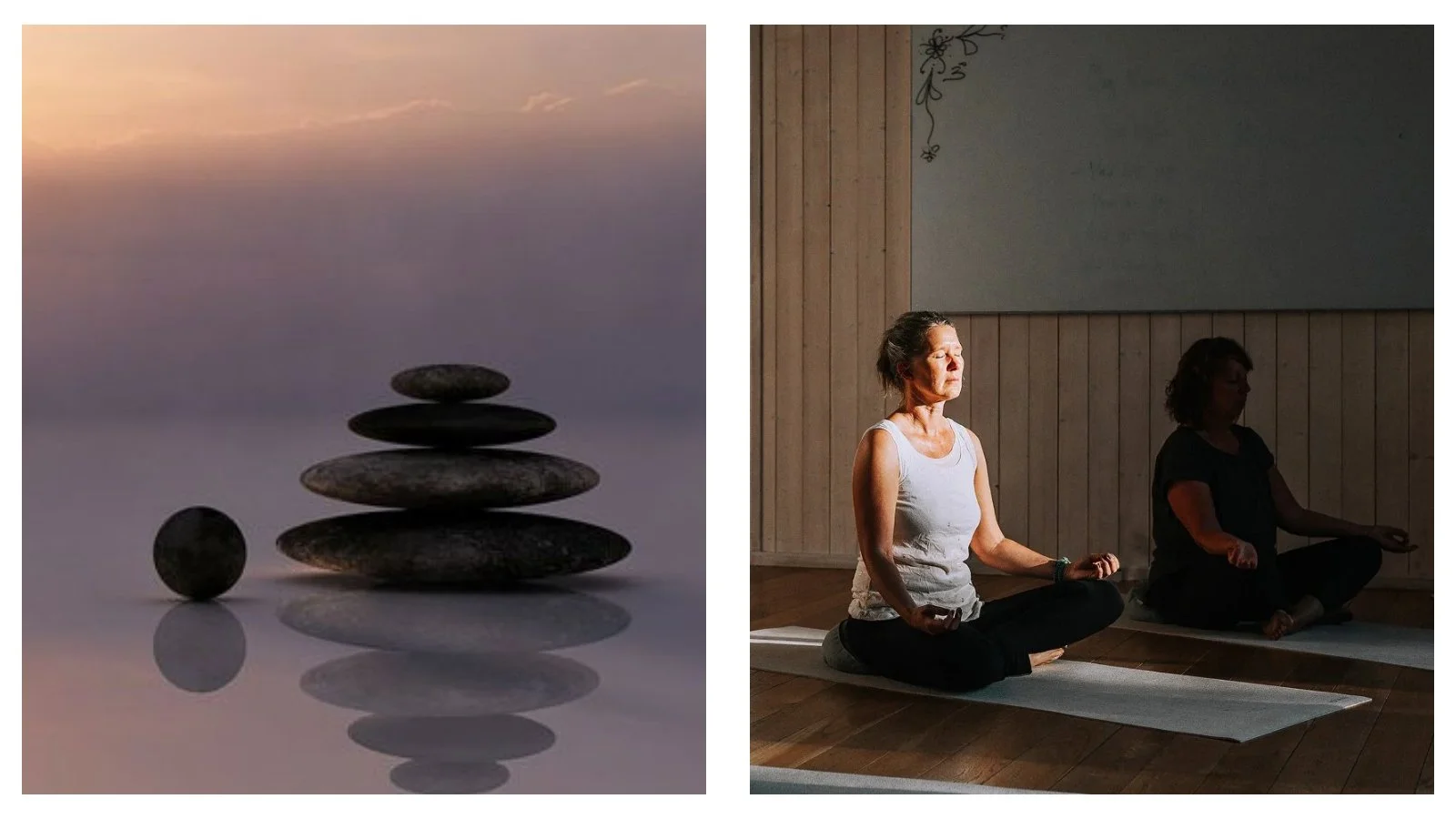
From the hustle and bustle of Manchester airport, frantic airport dads hurrying their families to the correct gate, blaring announcements that seem to compete with one another, and a sea of people positioned inconveniently in the way, to the tranquillity of a forest monastery deep in Northern Thailand, the contrast could not be more dramatic.
Here, the only noise is that of birds, wind rustling through the trees, and the crunching of leaves beneath your feet. No talking, no phones, no distractions, just quiet.
For travellers exhausted by modern-day connectivity, silent retreats are becoming a sought-after escape, writes Travel News Blitz’s Freya Leather.
What is a silent retreat?
They are often long periods of structured silence, with limited access to other forms of communication, such as the internet or your mobile phones.
The idea behind them is to focus inwardly, using meditation practices to free the mind of life's chaos.
The foundations of meditation derive from the traditional Buddhist practices.
The core practice for many retreats is Vipassana, meaning insight.
This ancient technique teaches us to observe things without reacting to or judging them. It is a secular practice, open to everyone regardless of religion.
Retreats vary in their rules from strict, no eye contact, reading, or writing, to more lenient retreats where journaling is encouraged as an alternative form of expression to the usual spoken way.
Why are they trending?
In a world where connectivity is so great, with constant digital overload and stimulation, silent retreats offer the rare concept of complete disconnection.
Being able to switch off and focus on ourselves is more of a luxury, as work messages are sent out of hours, remote work means no matter where you are, there is no avoiding it, and social media is showing us what everyone else is getting up to, as though it is a competition.
It feels as though there is an obligation to ensure your digital presence comes before your actual presence.
The retreats offer something we lack: downtime. Travellers seek respite from a world that never quiets.
They promise a chance to slow down, breathe, and reconnect with oneself.
The irony
At the centre of silent retreats is the paradox that the most freely available human experience, silence, is becoming a premium product.
A long weekend of guided silence can cost hundreds, even thousands of pounds.
What was once a sacred form of deep inner connection to oneself has now been made a money-making machine.
READ MORE: Travel news: From backpack to broadband - How digitalisation and globalisation have changed travel
When did silence come with a price tag?
Whilst the price reflects more than just quiet, as it covers accommodation, food, and structured teaching, with experience.
Uninterrupted silence in this era often means leaving home and therefore paying for travel, space, and support.
This also means it is discriminatory towards those who cannot afford the time off work, never mind the added expense of the retreats.
Modern silent retreats often are catered to those arguably less in need of quiet, as it is a privilege many cannot afford.
Silence has joined the list of other wellness trends circulating on Instagram, that humblebrag social position. Ironic for something supposedly set on removing digital distractions from our lives.
The flip side
However, there are still many traditional meditation retreats operating on a donation-basis.
The experience, whilst perhaps more simplistic, is all the more authentic, dealing with the human need for inner connection and silence from the rush.
An example of this is the Pa Pae Meditation retreat in Thailand, which offers a variety of programmes.
The three-day programme costs 1500 Baht (around £35), which covers food, accommodation, cleaning, and supplies.
Participants are asked to remain silent for the first evening and the first full day, along with every mealtime. A “silent badge” can be provided to those who wish to remain silent during the entire stay.
The itinerary of your stay would include things such as meditation and chanting, principles, meditation and nature, meditation with candles, walking, alms offering with monks, and experience sharing.
On their website, they state: “We don't have a policy for people to stay for free.
“However, what is most important to us is that everyone has the opportunity to learn meditation and wisdom. So, if this cost is outside of your budget, you can come and talk to us about your situation.”
For travellers budgeting, this is an amazing experience into the spiritual tradition rather than a marketing response to professional burnout.
The paradox of silent retreats is simple: real luxury isn’t the silence, but the freedom to afford removing ourselves from the systems that cause the noise.
READ NEXT: 78 days, 18,000 miles: Mark Beaumont on the reality of riding around the world