78 days, 18,000 miles: Mark Beaumont on the reality of riding around the world
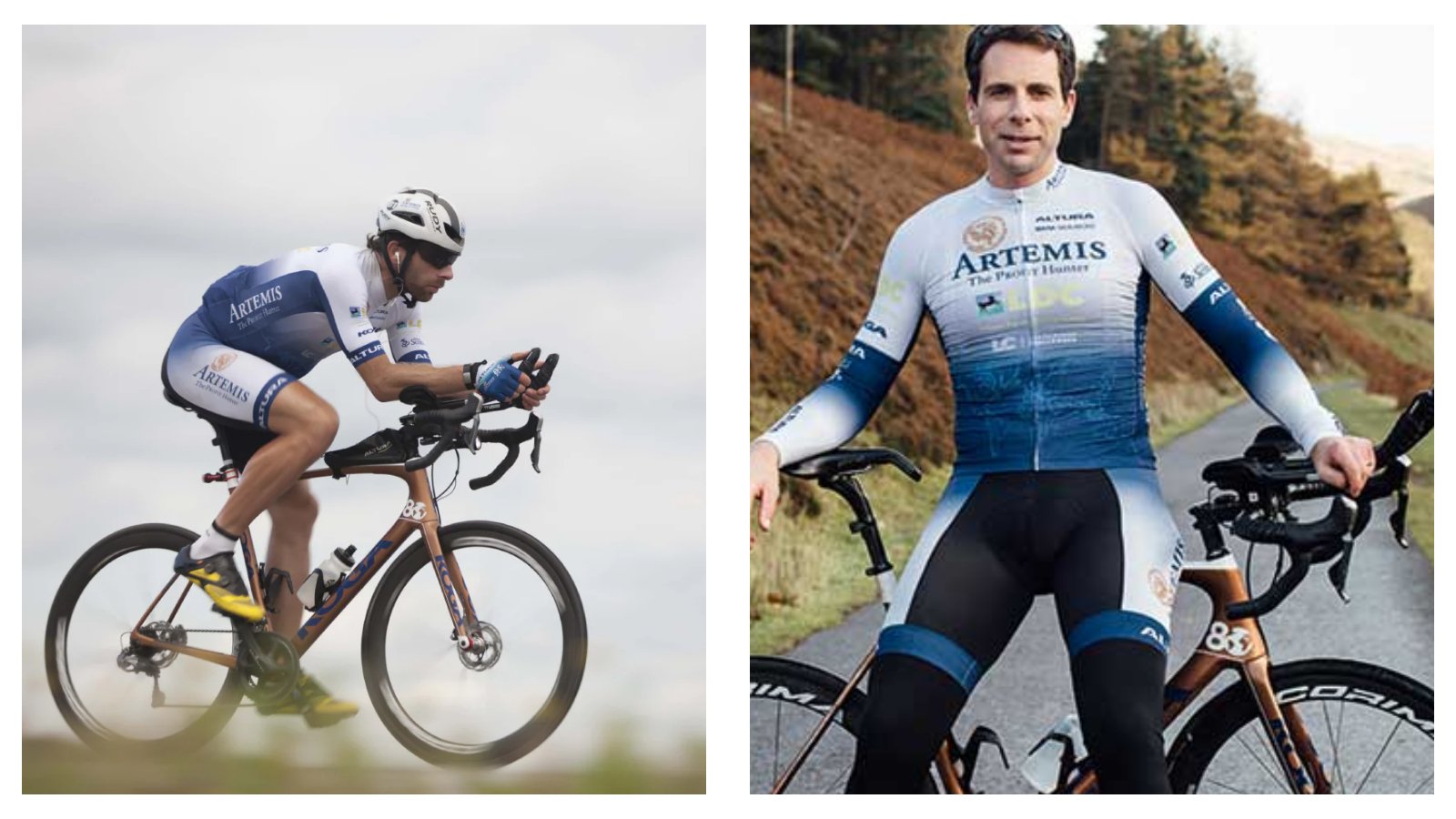
British endurance cyclist, adventurer and broadcaster Mark Beaumont holds the world record for cycling around the globe in 78 days, 14 hours, after covering more than 18,000 miles at an average of 240 miles per day.
Across more than 130 countries and two decades of expeditions, he has pushed physical and mental limits in journeys from solo rides across continents to extreme ocean and Arctic crossings, documented for BBC and global audiences.
Beaumont now channels that experience into keynote speaking on leadership, mental resilience, teamwork and performance, blending lessons from remote roads with insights for business and life.
In this exclusive interview with Inspirational Leadership Speakers Agency, he explains how travel, endurance and exploration inform his approach to adversity, high performance and applied strategy.
Q: Your record-breaking journeys have taken you across more than 100 countries. How have those global expeditions shaped the way you lead teams and approach ambitious challenges?
Mark Beaumont: “I spent 15 years doing expeditions to well over 100 countries and I was always trying to do with my amazing teams first and fastest. So, the whole point of all the expeditions I did was trying to create a different future.
“It was always about taking what had gone before and trying to imagine a different way of doing it. So, I never thought I was the best cyclist. It was always about how you build a team to do things fundamentally differently.
“So, the big difference I think between management and leadership, well there’s plenty of good people who technically know how to do the job, but leadership is that ability to actually imagine and then build a team around a different future.
“So, I did that as an athlete and broadcast projects for 15 years. I now do it as an impact investor.
“I’ve got 23 companies in my portfolio and it’s exactly the same thing. How do you have the leadership and the quiet confidence to imagine a different way of doing things and then resource that properly? And it’s the same thing whether you’re riding a bike, making a film, or scaling a business.”
READ MORE: Injured in Afghanistan, Jaco van Gass travelled to the North Pole and found a new purpose
Q: Long-distance expeditions demand resilience. How do you stay motivated through adversity, and what can travellers and explorers learn from that mindset?
Mark Beaumont: “Motivation is clearly at the heart of everything we do in terms of productivity, prioritisation.
“But I think you need to always remember that humans are human. We’re not robots. And you’ve got to keep kindness at the heart of high performance.
“So, this nonsense that you hear about, you know, you’ve always got to do better and positive mindset and other often used phrases, they miss the important fact that we have good days, bad days, good hours, bad hours.
“Life is a roller coaster and what matters most is consistency.
“The thing I care about most within my teams is behavioural change under pressure. Are you consistent when it’s going well or when it’s not going well? And the things that you think about and the things that you say and your actions are things that you ultimately control.
“So yes, I value people who have technical skill sets, but the thing I talk about a lot with my teams is actually how do you be consistent and how do you give quiet confidence to those around you?
“Because your behaviours and your words really matter. They percolate and we all cast a shadow around us in terms of how what you say and how you’re feeling influences other people’s behaviours.
“So that simple idea around it’s just got to be about being positive and motivated misses the important fact in the real world that actually life is complicated. There’s a whole load of stuff which is outside of your control.
“And what I always think about myself and with the teams that I work in is how do you put people back in the seat where they’ve got a level of agency, like they feel like they can control the world around them? And thinking when you’re in high-pressure situations, is this something that’s happening because of me? I’ve made that choice to put myself into a difficult place. Or is this something that’s happening to me, and I feel a bit out of control?
“I think it’s a really interesting framework to think about how you stay relevant to challenges as opposed to this ridiculous nonsense that you always need to be happy and motivated because guess what? In the real world, tough stuff is tough.
“And it’s really good to call it what it is and realise that you’ve got to have grit. You’ve got to have resolve. But it comes with a wry smile.”
YOU MAY ALSO LIKE: Travel news: From backpack to broadband - How digitalisation and globalisation have changed travel
Q: From remote roads to record-breaking rides, what have your journeys taught you about building and leading high-performance teams in unfamiliar environments?
Mark Beaumont: “A lot of people go through their education thinking that their value is what they learn to do or problem solve. So, school and university are often about the things that you can remember or the things that you can fix.
“What you learn in your career, whether it’s as an athlete or in business, is actually the soft skills, the things which are not taught through your education, that really matter.
“Things around communication styles, trust, integrity, decision-making, the ability for people to rely on you in different situations, network, actually being able to think quite laterally about problems and spot opportunities where other people don’t.
“So, it’s the things which are very hard. If I were to think about all the people who have come and gone through my teams over the last 25 years, the thing which you end up really valuing in people is who they are, not what they do.
“And I think that’s a daft thing to think about, but it’s so important because we all value ourselves by the job title that sits on our CV and the things that we’re known for, but actually, who you are as a person is not defined by your skill set.
“I work with boards all the time where you still have somebody on the board who defines themselves as an engineer or an accountant or a lawyer.
“Now that is a technical skill set and it’s the credibility to get you there. But what people are really relying on in terms of leadership is actually a much bigger view on the problem.
“And I often see high-performance teams with this sort of familiarity bias, as you see the problem through the lens of your own technical skill set, as opposed to being able to step back and say what is everything that I need to understand to be able to pull this off in my world in a first or fastest or pioneering way.
“So, if we’re trying to do things fundamentally differently, yes, you need all the skill sets and the component parts of the puzzle, but you need to be able to step back and say this is not just about finance or this is not just about logistics or this is not just about.
“It’s about all of those things. And leadership for me is about being able to step away from your own sort of technical skill set and see how everything fits together.
“You can see it in people when they step back from their own sort of familiarity bias and have that sort of big picture view on actually it all matters and everyone’s got their own bias and their own perspective on what’s important and that’s okay.
“But leadership and direction are about being able to acknowledge all of that, cut through the noise and have absolute clarity on what’s possible and how you’re going to deliver it.”
This exclusive interview with Mark Beaumont was conducted by Tabish Ali of the Motivational Speakers Agency.
READ NEXT: Everest Record-Holder Kenton Cool: Why Mental Resilience, Not the Summit, Defines Success