Everest Record-Holder Kenton Cool: Why Mental Resilience, Not the Summit, Defines Success
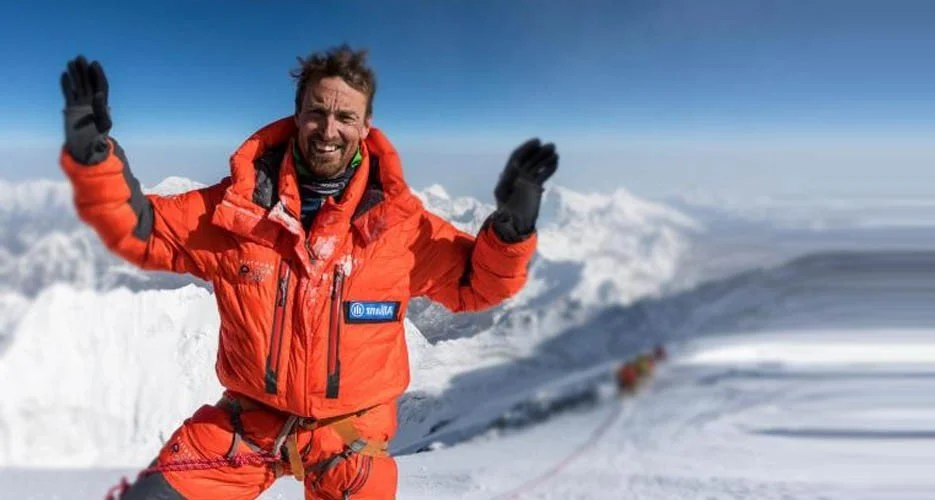
Kenton Cool is one of Britain’s most accomplished high-altitude mountaineers, known for his record-breaking ascents of Everest and leadership on some of the world’s most demanding expeditions.
Drawing on decades spent operating in extreme environments, he has become a respected mental resilience speaker, translating lessons from the mountains into powerful insights on focus, pressure and performance.
From navigating life-or-death decisions above 8,000 metres to leading diverse teams through uncertainty, Kenton’s career is defined by disciplined thinking, trust and accountability. His experience shows how clarity, preparation and emotional control determine outcomes when the margins for error are razor thin.
In this exclusive interview with the High Performance Speakers Agency, Kenton Cool reflects on failure, decision-making under pressure and how resilience is built long before the summit day begins.
Q: On your recent expedition to Laila Peak in Pakistan, you came close but did not summit. What did that experience teach you about adventure and how we define success in travel?
Kenton Cool: “I mean, Pakistan was super interesting. We got to within maybe 100-120 metres of the top. And it's one of those cliches. We learn more from failure than we do from success.”
“I think in its simplest form, when things go absolutely swimmingly, like most of my Everest, um, Everest ascents have done, we don't necessarily pick apart what happened and why did it happen.
“Whereas in Pakistan, this time, there was a period of decompression. It took us, what, four or five days to get back from the mountain. And during that period, everybody who was part of the team, so Dory, my number one climbing sherpa, the client, Richard, you know, myself, we were looking at what went right, what we could do to improve the overall experience next time?
“And the really interesting thing with climbing mountaineering is how do we define success?
“Yes, we didn't get to the top, but all of us said it's one of the most enjoyable adventures that we'd ever taken part in. So, you know, was it a failure? Quite possibly not.
“I mean, depends on how we define success. But the fact that we picked it apart, that's where the juice in the learnings lie. And if we had just strolled to the top, I don't think we would have reflected in quite the same way.”
READ MORE: Reimagining the road ahead: Andy Pag on the future of sustainable travel
Q: When climbing peaks like Everest, where there is no margin for error, how do you make clear decisions in extreme environments where rescue is not an option?
Kenton Cool: “Well, climbing big mountains, I mean, if we use Everest as the example here, as soon as we leave the top camp, um, we're already at 8,000 metres. There is no helicopter rescue. So we have to be totally responsible for all the decisions and the actions that come thereafter.
“So everything's got to be on point there. The margins for error on Everest on summit day are so small. And unlike almost every other industry, if we get it wrong on Everest, somebody's going to come away either with frostbite at best or possibly death.
“So I try to employ a system that we call binary thinking, and we try to strip away the noise, and I'm generally focused on just five or six things.
“Um, you know, the physical and mental state of the team, not just the clients but the sherper team and myself included. What the weather conditions are like, both sort of overhead and underfoot climbing conditions.
“How much oxygen do we have available, what the flow rates are looking like and how much we have in reserve and what the time is. Everything else is irrelevant.
“And I think when it comes to that really important, as you said, life or death, but we could use the term time-critical decisions, where everything has to be done quickly and efficiently, to strip away the noise, to strip away the fluff, everything is on our periphery. We need to double down and focus on what is actually important.
“And then the other thing that we need to be very conscious of is our decision-making has to be logical rather than emotionally driven. And that in itself is absolutely essential.”
“I mean we have this fantastic little short video from CNN of a hiccup high on the mountain and how we dealt with it, and it's all filmed and it's beautiful.
“It is such a great case study to look at and to be able to have that and pick that apart and look at what happened in the moment.
“That is a fabulous learning tool that we have in our back pocket. But life and death situations, it's got to be logically driven, and you've got to be focused on what is actually important. Real-time information that's being fed into the decision-making process. That is key.”
Q: Mountaineering relies heavily on teamwork. When conditions are harsh and the pressure is intense, what does effective leadership look like on the mountain?
Kenton Cool: “Well, leadership is a huge topic. You know, I do think that leadership is sort of top down. But the overriding principle I believe in leadership is trust. There has to be an investment from all stakeholders.
“In my world it's the clients, it's the sherpa team, it's the leadership team and we've got to have that trust relationship between all those stakeholders because if we do make time critical decisions there isn't time necessarily to deliberate over well if we do x, you know, what's going to happen, what direction is it going to lead us into.
“Critical leadership is built on that trust, and that takes time, and once you build that trust, you have to rigorously defend it.
“So, of course, we're going to make mistakes. There are times that we're going to make the wrong decision, but I forget who the philosopher was, you know, the wrong decision is better than indecision when things are time-critical.
“You know, stressful leadership, we find ourselves quite often up against it in terms of time. So we need to trust within the stakeholders, but we also need trust within ourselves, that self-confidence to make those often far-reaching decisions and then it needs to be accepted by the stakeholders, and then we need to move in that direction.
“But we also need to have trust in ourselves and the confidence within the team to pivot if we need to.”
MORE LIKE THIS: Walking into the world: The journeys that shaped Gail Muller
Q4: For travellers and adventurers listening to you speak, what do you hope they take away about pushing their limits and performing under pressure?
Kenton Cool: “When we deliver our keynotes, our deliveries, our workshops, ideally what we want to do is we want at least a number of the audience to walk away searching about their own presence on an everyday basis within that organisation.
“We want to elevate their investment. We want to elevate their performance so that every single day, they are bringing the best version of themselves to their desk or to their organisation.
“But more than that, we want to try to instil a winning culture because we can't just turn up at work every day and be the best version of ourselves every single day. It's just an impossibility.
“So that's where the culture comes into things because if we have a collaborative culture, a culture that, you know, to an extent it's nurturing a culture which is a collective, then if we go in and we're not having the best day, then our colleagues can understand and realize that and help elevate what it is that we're doing.
“Because ultimately what we try to do is instil peak performance, high performance in the teams that we talk to.
“We use the analogies of building high-performing teams in dangerous environments. That's what I'm known for. And if we can overlay that to organisations, then certainly I walk away from the stage feeling that I've done my job, and if we do it properly, then the organisation we hope will see an uplift in high performance.”
This exclusive interview with Kenton Cool was conducted by Tabish Ali of the Motivational Speakers Agency.
READ NEXT: Olympic legend Alex Gregory on how rowing around the world redefined his sense of adventure