
Reimagining the road ahead: Andy Pag on the future of sustainable travel
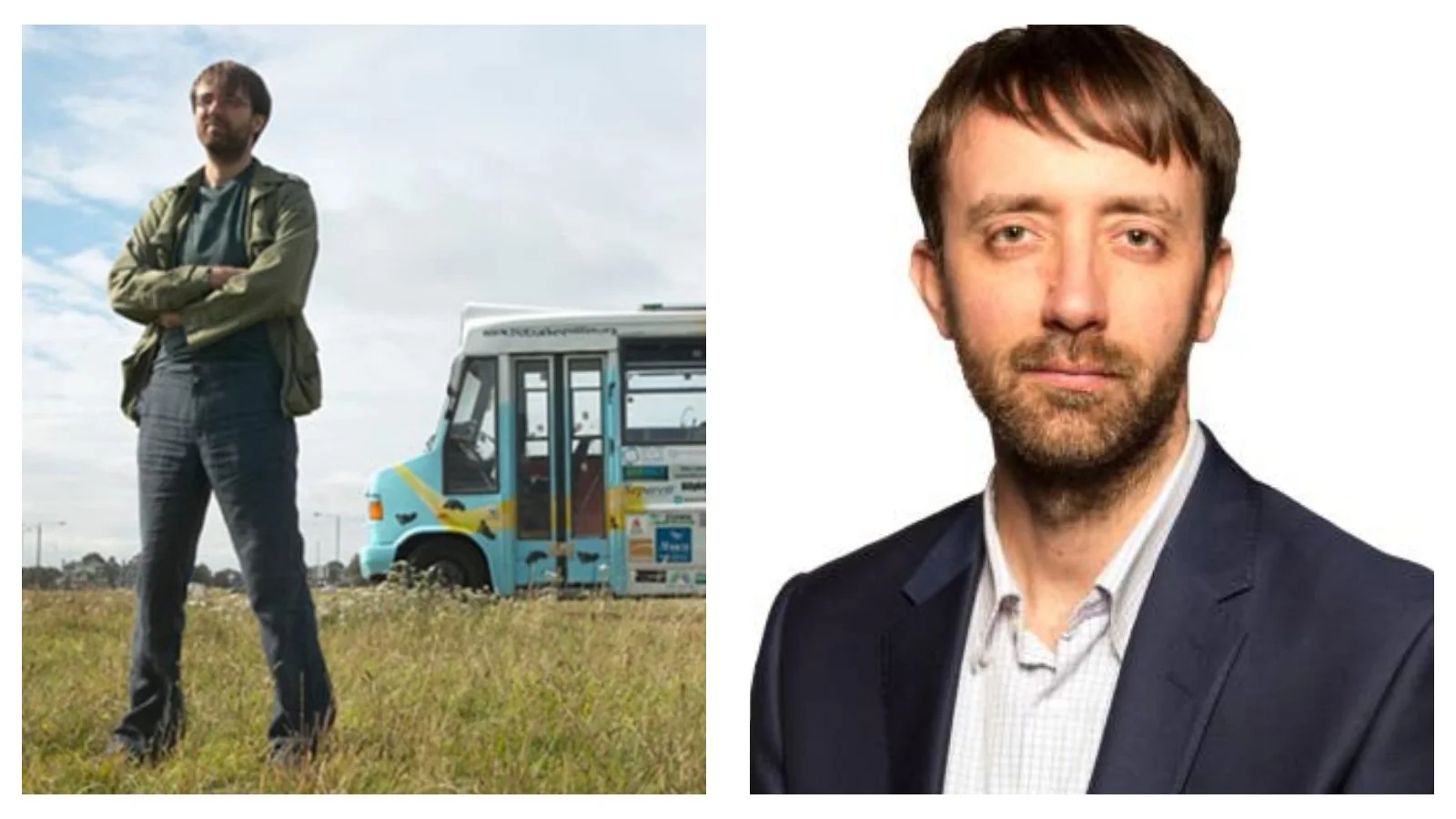
Andy Pag has spent his career challenging assumptions about how we travel, how we consume energy and how individual behaviour shapes global sustainability outcomes.
Best known for driving around the world in a car powered by used cooking oil, he has become one of the UK’s most distinctive sustainability and environment speakers, using real-world expeditions to explore the practical, often messy realities of low-carbon innovation.
His work as a journalist and investigator has taken him across continents, where he has tested alternative fuels, built systems from the ground up and examined how communities adapt to environmental pressures.
In this exclusive interview with London Keynote Speakers Agency, Andy reflects on the technologies, cultures and human choices that will define the next chapter of sustainable travel.
Q: Across your global expeditions, what has truly informed your understanding of building trust and collaboration between different cultures?
Andy Pag: “So a lot of my trips have been very ambitious and, surprisingly, they’ve overall been successful. And I think really, I must give credit for that success to the people I have met along the way that have helped me.
“So, collaboration is important. I have thought a lot about how that works and the mechanisms that go to make that successful or unsuccessful.
“And I think for me the key that’s unlocked that door is my genuine curiosity, and that curiosity comes from, I suppose in some ways, a kind of personal insecurity that I’m never quite sure that the way I do things or the way my culture does things is necessarily the right way, and there’s a curiosity to see, well how do other people do this somewhere else?
“And I think when you go to a place with that curiosity and you are emboldened to ask the questions and engage, I have learned everything I learned about diesel engines in Morocco hanging out with mechanics.
“Everything I know about fibreglass boats I learned in Guatemala hanging out in the boatyard.
“I learned how to cook a dal bhat when I lived in Nepal.
“And these are all collaborations, if you like, that have come about through curiosity.
“In my career I have been a journalist for most of my life and a private investigator for part of it as well. And people often think that as a journalist you have some special legal exemptions or powers that allow you to do certain things, and you absolutely do not.
“The only powers, if you like, that you have as a journalist is that socially it is acceptable for you to ask those probing questions that people otherwise would feel a bit awkward about asking. And again, journalism for me has been the perfect excuse to exercise that curiosity.
“And there is a second element to it as well, which is that that curiosity is often reciprocal. If you are in a place that is foreign to you, then you can guarantee that you’re foreign to that place. So, it’s important that you encourage that curiosity and that questioning to come back to you.
“So when we did the Greece to Greece Rally, where we drove 10 cars from London to Athens powered by used cooking oil that we scavenged along the way, a lot of the places we stopped had never heard of this idea that you could run a diesel engine on used cooking oil. And so, a lot of them were asking us questions and we were showing engines and this is how it works, these are the modifications and this is what you can do.
“And again, that collaboration is not necessarily one way. Well, by definition, it’s not one way and that curiosity is not one way.
“So I think that’s really the key for me, that’s what I’ve found, that a kind of curiosity and finding those kind of social mechanisms that allow you to indulge that curiosity and ask the questions that maybe, in a more formal setting or in other settings, you wouldn’t get away with asking.”
READ MORE: Walking into the world: The journeys that shaped Gail Muller
Q: From your perspective, how are emerging technologies genuinely reshaping the future of sustainable transport and travel beyond the hype?
Andy Pag: “Yeah. So, there was an era, back in the early noughties, where people first cottoned onto this idea of using used cooking oil to fuel their cars and it became very popular as a sort of garage hobby thing to do.
“Then the competition for getting oil from restaurants became increasingly difficult and then the waste oil started to have a value. So, then there was a cost involved.
“And then actually what happened is that that whole process got consolidated by biodiesel producers who were making fuel in a much more efficient way. So, it was hard luck for the garage enthusiasts like me, but overall it was quite a positive thing.
“In terms of technology, it’s nice to think, when you think about the climate crisis and the way we use energy, it’s lovely to think that there’s going to be some technological panacea out there that’s going to solve everything.
“Electrification is certainly working wonders in terms of cars, personal transport and rail networks and the electrification of our grid.
“Those are great solutions. They work well and what’s uplifting and positive to think about is that they are happening at pace.
“You look at the pace that the UK is rolling out electrification of the grid. It is amazing. And the UK is not even one of the fastest countries around the world that are doing it. So, there are reasons to be positive there.
“There are some forms of travel that I personally don’t think that in my lifetime we’ll see carbon-free versions of.
“So, freight transportation. it’s very difficult for logistical reasons for freight transport to be electrified in terms of charging times and downtime for vehicles. There’s a kind of economic pressure on freight transport that makes that very difficult.
“Planes, the amount of energy you need, the battery technology is evolving, but again, I don’t think in my lifetime we’ll see electric-powered planes that can do even short-haul distances at the sort of speed and the way we use jet planes at the moment.
“And so, there are technological solutions that can help in one respect, but some solutions must be more societal.
“We must think about how we use resources in a more sustainable way and think about how we make those societal value judgements. I think with plane travel, it’s a difficult one. It always becomes a contentious issue to talk about, but I think really, we must value plane travel in a very different way.
“We live in a world, certainly in the developed world, where we have connections that are very far away. Our lives have grown in a way that our social networks are expanded and that’s been facilitated by plane travel and if you were to suddenly turn that off then that’s a difficult challenge to solve. My mother lives in Turkey. I like to go and see my mother. There’s not really the option to drive. It’s too far away. So how do you reconcile those things?
“So I think that has to be something that is decided on a societal level, how we valorise the resources that go with plane travel in a way that means that they’re fairly used and responsibly used with respect to the people who are at the other end of the climate crisis consequences.
“So that really comes down to having, it’s funny you’ve asked me a question about technology, but at the end of the day it comes down to having functioning governments, functioning institutions that have a resilience to lobbying, that can make rational decisions.
“Again, sustainability at the end of the day is all about the well-being of humanity. It’s a social justice issue really.
“And so, some of the technology can certainly help, part of that is part of the answer, but there’s a bigger context and a bigger framework that some of those decisions have to be made in.”
MORE LIKE THIS: Olympic legend Alex Gregory on how rowing around the world redefined his sense of adventure

Q: When audiences step away from your talks, what central message or shift in perspective do you most want them to leave with?
Andy Pag: “I often get booked by clients because my story is quite quirky. You can imagine trying to fill up a van with used cooking oil from a crisp factory in Thran. These are funny, entertaining stories and it’s a nice distraction.
“Often people find it good to have me talking straight after lunch to snap people out of their food coma before they go back into the meat and the content, the meat of the content, of their events.
“I think what’s important for me is to get across the optimistic and the positive message about the direction of travel that we’re on in terms of sustainability and that change is possible and positive outcomes are happening and can happen.
“I think all too often, the sustainability gurus, there’s an element of doom and gloom and threat and if we don’t do this, this bad thing will happen, and they’re not wrong.
“But I think there’s another way of framing that message of you know, there are some positive things we can do that have a positive effect.
“I like to think I have quite a conversational style, so maybe I’m not as fluent. I’m certainly not a sort of authoritarian speaker that pronounces “this is how we do it”. And I think that works well. I think big rooms end up feeling more intimate and small rooms feel more significant. So, I think that works quite well.
“And my personal goal whenever I’m giving a talk is I like to leave clients thinking, “Oh, that was actually a lot more thought-provoking than I was expecting.” So, as I say, I tend to get booked because the stories are quite quirky and quite novel. But for me, telling the ‘jestery’ stories about the time I was arrested or whatever, yes, it’s good fun.
“But actually, for me what I find rewarding about talks and sharing my thoughts on this is giving people a new framework or a different set of frameworks, a different set of perspectives to look at the issue of sustainability.”
This exclusive interview with Andy Pag was conducted by Tabish Ali of The Motivational Speakers Agency.
READ NEXT: Paralympic champion Naomi Riches on turning adversity into adventure
