Walking into the world: The journeys that shaped Gail Muller
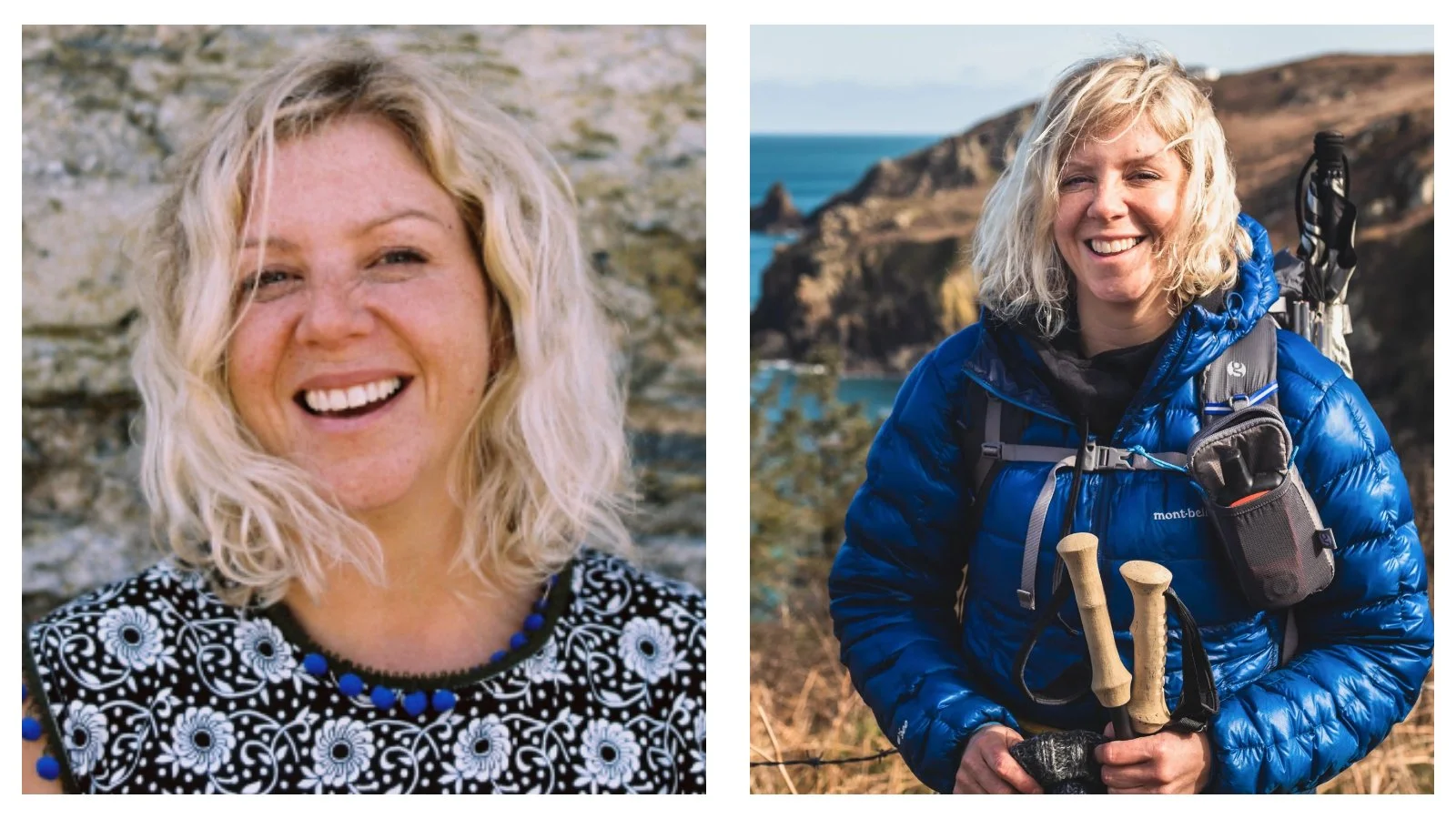
Gail Muller stands as a powerful figure of female inspiration, known for turning adversity into adventure and using the natural world as both teacher and healer.
As a bestselling author, educator and long-distance hiker, she has inspired audiences around the world with her honesty, resilience and belief in the quiet strength found in wild places.
She continues to motivate women and communities to reconnect with themselves, with others and with the landscapes around them.
In this exclusive interview with Female Motivational Speakers Agency, Gail reflects on the experiences that shaped her and the journeys still to come.
Q: You describe yourself as an “accidental adventurer”. From your perspective, how do these lifelong connections to the outdoors shape your approach to adventure, and in what ways does time spent exploring the world support your personal wellbeing?
Gail Muller: “I think I'm an accidental adventurer because I think being a Cornish woman and growing up a Cornish girl, I was always connected deeply to the outdoors, to the sea, to the tides, to the seasons.
“So, I think that the outdoor adventure aspect of my nature is connected to nature. And nature is seasonal. And it may seem cliché, but to me, it's fundamental to my being that I see myself as a seasonal person, too.
“I have wintering periods. I have bright spring periods where anything is possible.
“And if we always try and remain in one season, nothing works very well because everything needs to rest or regenerate. Just like you might see trees with big scars on them where there's been a storm and a branch, as I mentioned earlier, has maybe blown off, a tree finds a way to heal that through time and sprout leaves again and blossoms from that. And that it has a scar like we all have scars, but those scars end up making it unique and beautiful and able to flourish in a different way.
“So I often look to nature in my adventures. I adventure a lot outdoors. But also the word adventure, I think, could do with some rebranding.
“And I think we are moving in that direction because it can sound alienating to some people that you have to be a mountaineer or you need to be doing, you know, exploring territory that's been barely explored by anybody else on Earth, or it needs to be overseas or to take weeks and months out of a work schedule or a family life. It doesn't.
“An adventure is something where you put yourself outside of your comfort zone, what you feel okay about in the direction towards a dream. Whether it's that you want to challenge yourself to see if you can walk, I don't know, two days with one night of camping.
“Not necessarily wild camping, but putting all the things you need in a bag, walking to a campsite around some footpaths, putting up your tent, saying hello to the local people who own the little campsite, and then walking your way back again on your own. For some people, that's a huge adventure.
“But what might seem to be more adventurous is joining a trip to go, I don't know, kayaking down the Zambesi for two weeks with a guide, that is super adventurous, too.
“But when you put your pack on to go and walk the footpath around your local town and go and camp in a campsite where you've never done that before on your own overnight, that's truly adventurous.
“So, I think I rebrand adventure into being anything, whatever it might be. You might be slightly agoraphobic and going to your local park, sitting on a bench and watching people go by and smiling and saying hello to a couple of people.
“That feels like an adventure if you're feeling a little bit insecure and you don't want to go outside very much. So, it's all about context.
“I would also say that the idea of exploring is interesting because I explore all the time. I explore my own brain. I explore other people's minds and how they work, and working with people, and I explore the world.
“I think over the last 10 years or more I've been really mindful about how I see exploring being mindful of the planet, being mindful of the impact also that whatever I experience and come across and I'm a part of, whether it's walking through a village or whether it's you know riding my bicycle along a coast path through a town, the people I meet and the places I go are impacted by me just as I am impacted by them.
“So I'm always mindful of how I put energy out and what I take and what I give back, and that that balance remains good.
READ MORE: From fighter jets to space dreams: Nicola Winter on building mental resilience
“And the last thing I'd say about adventuring and exploring is it really does give you back your faith in humanity and in the world because we're peppered daily with, you know, headlines that are slightly inflammatory and divisive.
“These people don't like these people. This is all, you know, terrible, and actually you can feel really grief-stricken by how the world seems.
“But if you take a step outside of your house or if you go on a little adventure, you will meet people if you engage and interact in a safe way who would give you anything they could to help you or find out what you're doing and be so kind, be strangers, that you realize the world is full, mostly full to the brim of good, kind, helpful human beings in every walk of life, in every job, in every business, in every holiday park, in in every place you can think of.
“I walked through the Via Jana, which is from Canterbury Cathedral to Rome. It follows a religious spiritual route, and as I was walking across France, I was feeling pretty miserable when I started that hike.
“Within 3 days, I had asked some locals in my pidgin French where the bus stop was, and where I could get some fresh water. And then we're getting guide books out with French language books, and we're trying to explain, and they're telling me their history of the village, and I'm telling them where I come from.
“We're all laughing our heads off, and they give me a little chocolate bar to take with me.
“We couldn't really understand each other. But for 10 minutes, all was right with the world. Strangers had become friends.
“And it reminds me so profoundly of that and all of the long trails. When trail angels you don't know will come and offer to drive you to a local town to help you shop so you can fill up your bag of supplies, or they offer to do your laundry for you for free and then get you back to the trail so you can carry on walking.
“Adventuring is a great way to use your legs and feet, cycling, walking, whatever it might be, to connect you back with humans. And really every workplace, every social place, every friendship group, every difficult moment we have, it's just human beings doing the best they can with what they have. And adventuring really reminds you that there's a lot of good in all of them.”
YOU MAY ALSO LIKE: Explorer Mark Wood: The chilling truth about our warming planet
Q: You’ve completed some of the world’s most challenging long-distance journeys. Looking ahead, what major challenge or personal project are you most excited to pursue next, both on a global scale and closer to home?
Gail Muller: “I'm very excited to be getting to go to Mongolia to visit a not-for-profit kind of nomadic camp where you eat outside in the steppe in Mongolia.
“You kayak and canoe down the rivers, and you get to ride the Mongolian ponies across the steppe for hours at a time. You get to help milk the yaks and bring in the horses, and get them all saddled up and ready for the group to go and ride.
“I love that it's not for profit. I love that it goes back into the local community, educating and training young riders in Mongolia for the Mongolian national polo team.
“I know nothing about polo, but I'm excited to see how that works. Not my sport, but I've always loved and dreamed of riding ponies, and Mongolia is an incredible place to do that.
“So that's like a big ‘macro’ dream come true for me. And of course, I think anybody might find that exciting. It's niche. It's not where many people get to go. It's empty and wild. My favourite places are empty and wild and just full of animals and nature. So, that's sensational.
“Something that might not be as exciting for everybody else, but is very exciting for me, is much more ‘micro’. Now, here in Cornwall is where I start this kind of project, and I've looked at this quite a bit, and I'll be looking at it more, and it's about footpaths. The Ramblers Association does a lot still with highlighting how footpaths are falling out of use.
“My degree is archaeology and ancient classics. And I have done a lot of thinking about how these routes we walk every day, whether it's a cut through to the shops in a housing estate or the footpath or from village to village through the back of the parish church.
“Many of those footpaths have been there for hundreds and hundreds of years, many more hundreds of years.
“And how did they first originate? Well, it was so that people could trade from one village to another, so that they could meet and marry other people. Sometimes it was for war, for battle, for rivalry. It was for communication. It was for supporting in times of invasion or conflict.
“So, these routes we now drive past really fast in cars or that farmers sometimes block off because they don't want people coming through, or people neglect to look after their dogs, so it causes a problem with livestock.
“These little routes we don't think about are actually the lifeblood of understanding why we live where we live, how our communities originally evolved.
“And if we lose an understanding of our footpath network, we're losing our roots of community that lie above the soil. If you like, there are the roots of the trees obviously below the soil, but the roots of how we work as a society, our village structures that lead to towns. If we lose that and stop walking them, I think it heightens the sense of disconnection we all have these days.
MORE LIKE THIS: How Mitch Hutchcraft went from extreme challenges to inspiring the business world
“So an adventure for me is to continue finding old OS maps, walking these routes from village to village, talking to people at each end in the village, finding out some of the history and the stories and reconnecting these footpaths in the minds of the local people who live there.
“Maybe going into the schools, talking to the kids in the schools, talking to the parish council, the WI, and bringing the narrative history of these footpaths, and some of the people that may have walked them, and some of the incidents that those footpaths might have seen two, three, four, 500 years ago. [This] helps people to care about them.
“And if you're caring about wildlife, if you're caring about the footpaths, then you start to care about more than that. You care about the people you see along them. You ask them why they're there. You say hello. You pick up litter.
“And then you ask other people not to drop litter. And then you might, you know, start teaching a friend about it or another young person about it.
“And then hopefully over time we can start to help to rebuild this connection that we lose through being constantly online and in our own rooms and on our phones.
“We can look up, and we can understand where our feet are going rather than only ever looking at a screen. That's a dream. That's my micro dream I've been working on and I'm really going to dig back into that this week.”
This exclusive interview with Gail Muller was conducted by Megan Lupton of The Motivational Speakers Agency.
READ NEXT: What leading teams on the edge of the world taught Ann Daniels about true resilience