‘I broke a world record and felt nothing’: Vicki Anstey on what success really costs
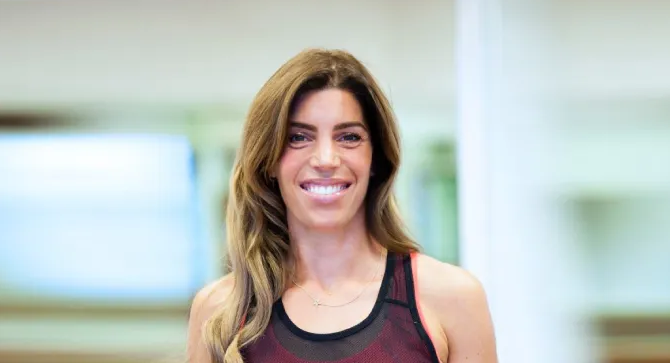
Vicki Anstey’s journey is rooted in pushing beyond limits, from rowing unsupported across the Pacific to competing in some of the world’s harshest environments.
As a two-time world record-holding adventurer and one of the first female finalists on SAS: Who Dares Wins, her experiences are shaped by resilience, endurance and a deep understanding of human performance under pressure.
Her career spans from the corporate world into extreme endurance sport and performance coaching, where she now works with organisations and teams on stress, resilience and mindset.
A TEDx speaker and human performance mentor, she draws on real-world experience in environments ranging from Arctic races to ultra-distance cycling across America.
Today, she stands out as a leading female inspirational speaker, known for translating high-stakes challenges into practical insights on emotional endurance, psychological safety and sustained performance. Her work focuses on helping individuals and teams understand fear, reframe discomfort and unlock untapped potential.
In this exclusive interview with the Mental Health Speakers Agency, Vicki Anstey reflects on discomfort, resilience and what it truly means to perform under pressure, drawing on lessons shaped by some of the most demanding environments on earth.
Q1. In extreme environments and expedition settings, how does discomfort shape resilience and personal growth?
Vicki Anstey: “I mean, again, this is about reframing what we consider to be our capabilities, and it's about building resilience, essentially.
“You know, resilience is the combination of all sorts of moments in our lives and experiences and hardships and difficulties that combine and create this sort of robust system that allows us to kind of move forward and realise that actually, ‘if we dealt with that, we can absolutely deal with this,’ and that builds and creates its own momentum. It actually becomes, in some ways, quite addictive, which can be a wonderful door-opening opportunity in life.
“But I think it's also, it's not just about kind of pushing hard and pushing harder and constantly sort of trying to find new edges. It's also about having moments of peace and restoration and allowing ourselves to truly relax. And there's a wonderful saying by Einstein, that ‘a lazy man will never know the enjoyment of a good rest.’ And I love that.
“I've experienced that myself, having really pushed myself through situations that have been extremely uncomfortable at times, sort of life-threatening, in really extreme environments and enduring quite a lot of hardship. Not just in experiences that I've chosen to go into, but also just in my own life, in relationships that I've endured.
“And I think having gone through those hardships, having experienced that discomfort, allows you to experience true comfort. I think it really teaches you who you are. When you go through those periods of time, you realise what you're actually capable of, what's really in there, what the internal resources are that we all have access to, that we can utilise.
READ MORE: Suzie Imber on what climbing the world’s toughest mountains teaches about resilience
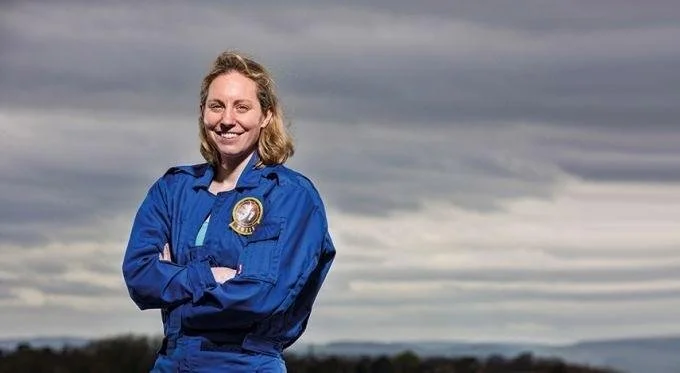
Q2. Drawing from experiences like rowing across the Pacific and crossing America, how do you define ‘winning well’ when success comes at a personal cost?
Vicki Anstey: “Yeah. The difference between winning and winning well, and really, that comes from the juxtaposition of two different, very different experiences in my life. Rowing across the Pacific and cycling non-stop across America - the first providing very little psychological safety, a very dysfunctional team, and the absolute opposite.
“And realising that you can set and break world records, which feels like a huge achievement, but that you can also feel a lot of regret if you haven't secured that achievement well. And that certainly was my experience from rowing across the Pacific.
“There's something quite extraordinary about knowing that you've set a new world record, but that you don't feel any real joy from that achievement.
“And so really it's about reapplying the learnings from that, and any time that we find ourselves in dysfunctional teams, starting to unpack that and try and work out why that might be, what's lacking, not just what marginal gains we should be looking for, but what are the marginal deficits as well.
“What do we need to address? How well do we know each other? How well do we really know ourselves? That's of vital importance, so that then, regardless of the outcome, whether you do secure a sale or an achievement, whether that's in business or in sport, that you've been working so hard for, if you've done that with integrity, then in a way the outcome doesn't matter too much. It really is about kind of what you've learned about yourselves and each other.
“And I talk a lot about free speed. The concept of free speed, which in cycling terms is all about increasing your speed without changing your power output by addressing things like your position on the bike, aerodynamic drag and even where you put your water bottle and how clean your chain is.
“Cyclists get really obsessed by these things, and these are all the sort of marginal gains that you can make to go faster for the same power output.
“But I discovered that actually all of that comes down to people, and it's about reducing or removing the unhelpful drag, the drag of unhelpful attitudes or kind of emotional friction that might exist when, as a team, you're not moving smoothly in the same direction.
“So that was a huge lesson for me and really useful in a way that, although I wouldn't necessarily choose to go through an experience like my Pacific row again, it's provided a very helpful reference point from which to adjust future endeavours and to advise teams and leaders what really constitutes true psychological safety and why we need it so much.”
Q3. In high-pressure journeys and team-based expeditions, what role does psychological safety play in sustaining performance and decision-making?
Vicki Anstey: “Yeah, I mean, it's a much-used term, and I don't think it's always very well understood. Psychological safety really isn't about just being nice to each other. It goes much deeper than that. It really is a biological imperative.
“So there are a lot of things that go on under the skin in our central nervous systems that are reliant on us feeling a sense of belonging, feeling that we have this notion of psychological safety, that we can raise concerns or offer suggestions without any fear of judgment or negative outcomes.
“It's about social engagement. It's about inclusion. And once we can establish that in a really meaningful way in our teams and in our organisations, then our output, our productivity, our efficacy accelerate rapidly.
“It's not just about sort of being polite or being kind - although those things are also really nice to have in teams - but it's really understanding the value of that deep sense of psychological safety.
“Not being afraid to make mistakes. I think we often think that that's sort of the marker for success or failure, and it's really not.
“And the teams that have the highest levels of psychological safety also make the most mistakes, which sounds like it shouldn't make sense, but actually, it's not necessarily that they're making more mistakes. It's that they're happy to report them, happy to learn from them, to debrief from them and feel safe in sharing that.
“So, yeah, it's an environment that creates a true sense of contentedness, allows people to really be heard, not just listened to, and gives people a sense of agency and self-efficacy and feel that they have true impact in the world around them.”
ALSO ON TNB: Seven things to do and see in Madrid as Formula E races here for the first time
Q4. When you speak about your expeditions and experiences, what do you want audiences to take away about challenge, mindset and personal limits?
Vicki Anstey: “Well, I hope a little bit of inspiration, perhaps some realisation that we can all do much more than we think, and some relatability within that, I think, is fundamental.
“I'm really not a born adventurer or a lifelong athlete. Very, very far from it.
“My life has taken all manner of different twists and turns. And so, I hope people hear me speak and don't just put me into a category that is kind of, ‘oh well, I need to be someone like that to be someone like that.’ In fact, you can do anything. Any of us can do anything we set our minds to, and hopefully some really useful applications as well to take forward into their lives at work or at home.
“I'm a stress and resilience coach, as well as a motivational speaker and an adventurer. So, all of that knowledge about how we can manage and manipulate our systems to our advantage, how we can manage our thoughts and our emotions better as well, all of that comes into it.
“And in understanding that, we can give ourselves a bit more forgiveness too. That we are not just being unreasonably reactive to a situation. There's actually a lot of stuff that's going on internally that would drive that, but that we can actually manipulate to our advantage. We have some control over.
“I hope for a fresh perspective. I'm not someone who only speaks about things that I've done in the past. I'm continuing my journey. It continues to evolve.
“As you know, I'm rowing the Atlantic in 2026. So, a whole new adventure to prepare for. And so, within that, I guess, a reminder that we never really arrive and that the real gift is kind of what you learn about yourself in the pursuit of it.”
This exclusive interview with Vicki Anstey was conducted by Tabish Ali of the Motivational Speakers Agency.
READ NEXT: You can’t outgrow ambition: Helen Glover on gold, grit and going again