Tourism in the digital age: How the internet is changing travel
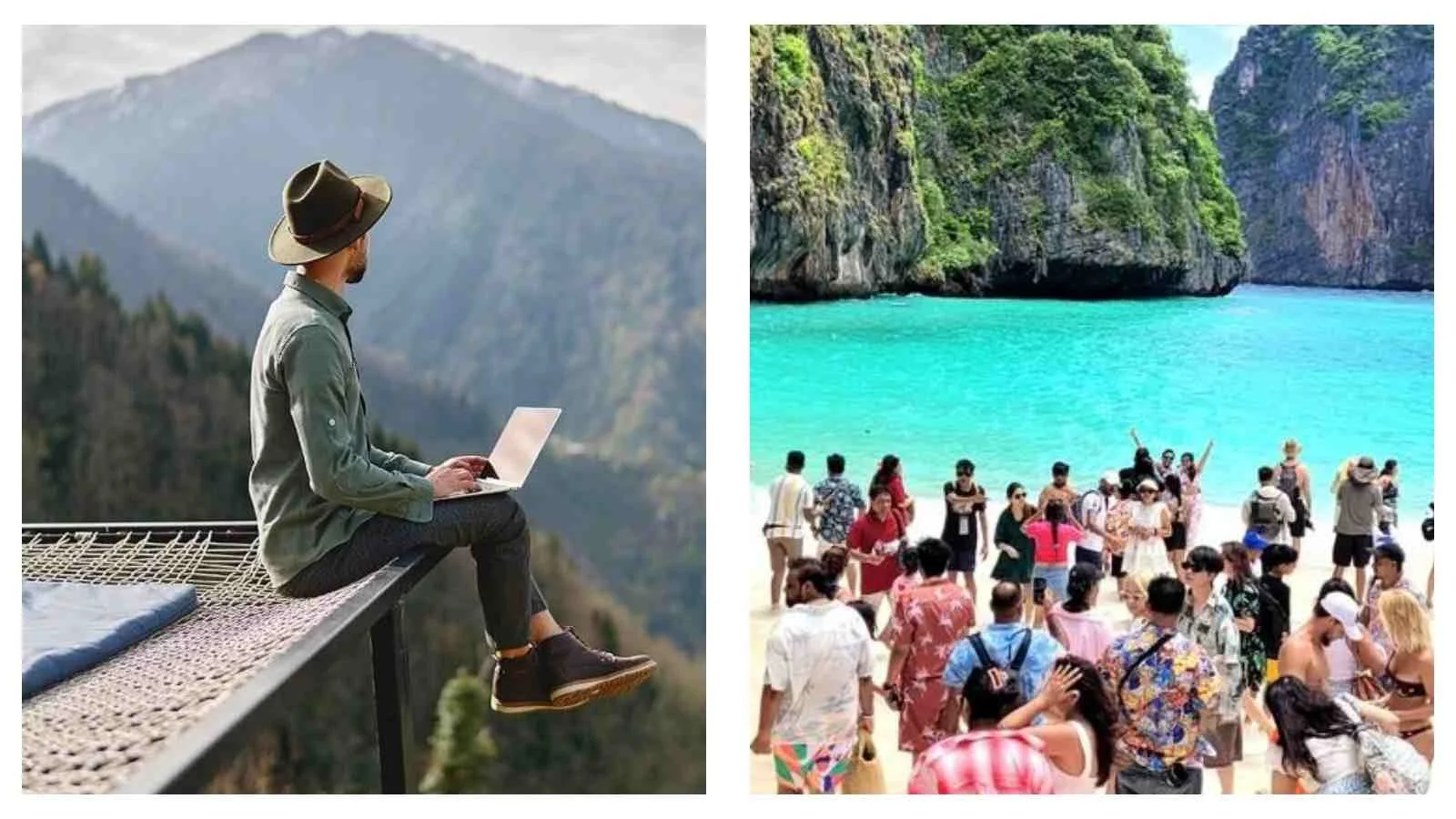
From viral Instagram destinations to digital nomads, the internet is transforming the tourism industry, writes Travel News Blitz’s Annika Winzer.
Previously, organising a trip relied on a brochure, a travel agent, or at the very least, a lot of planning.
Now, the internet has given people the freedom to take planning into their own hands.
Looking for flights, accommodation, and creating itineraries has never been easier, especially with the rise of social media.
Platforms such as Instagram and TikTok are filled with recommendations, from coffee shops to kayaking.
With the help of AI, travellers can now create personalised itineraries depending on cost, trip duration and interests.
While this has made travel more accessible for many, and boosted the local economy in previously unknown destinations, social media and the internet have also created challenges for communities that are struggling to manage this new age of tourism.
Problems for viral tourist destinations
Destinations that go viral on social media can often face overtourism, as was the case with the Balearic Islands.
Social media influencers and other posts on social media are seen by thousands, and sometimes millions, of people, encouraging flocks of people to head to the same ‘viral’ destination.
In the Balearic Islands, one such location includes Caló des Moro in Majorca, a small cove that has suffered from overcrowding and environmental impacts, such as littering, as a result of going viral.
This has led to the local authority removing images of the cove from its website, and shutting a lookout point at the cove.
The pink lakes in Australia and Lavender fields of Brihuega in Spain have dealt with similar issues.
What issues did tourism cause for Brihuega?
Brihuega, a small rural village, has been overwhelmed by tourists.
Over 100,000 tourists visited the Lavender fields in July 2025.
This led to issues as its infrastructure, which consists mainly of narrow roads, is not suitable for the influx of visitors the village has seen.
The impact of tourism on locals
Locals in places suffering from overtourism have become increasingly frustrated.
In peak season, or in places that have gone viral, locals struggle to go about their daily life as crowds of people disrupt their commute, their environment and drive up prices.
Additionally, infrastructure that prioritises and caters to tourists is facing backlash from local communities.
Why are people protesting against tourists?
This ‘touristification’ of many popular travel destinations is being met with protests, such as in Barcelona and Venice.
A key factor driving these protests is housing, as locals are pushed out by rising prices and the conversion of homes to holiday rentals due to platforms such as Airbnb.
What are digital nomads?
Another aspect of the changing travel industry are digital nomads.
Digital nomads travel while working remotely, using the increasingly online world to their advantage.
As digital nomads are capable of boosting local economies with their spending, contributing to the development of the local community, many digital nomad visa programmes have been introduced in recent years.
However, if not carefully planned, these visa programmes can lead to gentrification and divides between locals and digital nomads.
The future of tourism
As technology continues to evolve and everyday life becomes more and more digital, the tourism industry is bound to adapt and change to this new normal.
The increasing use of AI is also likely to challenge how the tourism industry functions.
While this new era brings challenges for local communities and tourism boards, it also opens up the world for many people who have previously been unable to travel.
READ MORE FROM ANNIKA WINZER: What films are coming to cinemas in the UK this winter?