China travel guide: Three things to see in China’s panda city
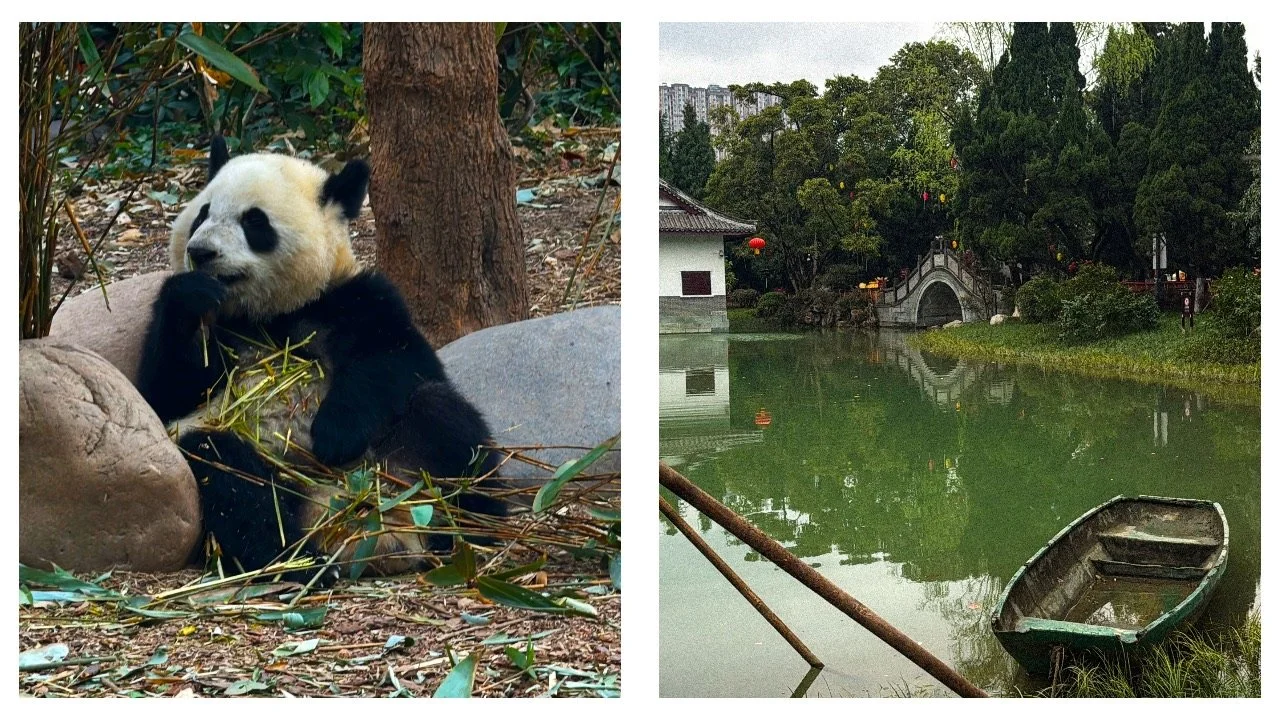
The city of Chengdu is home to one of the most iconic symbols of China and global wildlife conservation: the giant panda.
Here, the adorable creature and China’s national animal has been nurtured out of their endangered status.
However, the city’s reputation doesn’t stop there, as it is the site of a rich ancient history as well as one of the country’s most prominent alternative culture scenes.
Additionally, it is notorious for being extremely laid-back… a contrast to the nonstop lifestyles in cities like Beijing and Shanghai.
Travel News Blitz’s Zach Heynes takes you through three tourist activities to do in Chengdu, as explored in his China Travel YouTube series.
Kuanzhai Alley
Kuanzhai Alley is a collection of three parallel ancient streets: Kuan Alley, Zhai Alley, and Jing Alley.
It is one of the largest surviving ancient streets of the Qing Dynasty and one of Chengdu’s cultural preservation areas.
Established in 1718, the area - and Kuan Alley in particular - boasts the city’s most extensive collection of antique buildings.
Today, the district is a blend of fostered Chengdu culture through its local cuisine, customs, and architecture, while also providing a fusion element with the inclusion of Western and contemporary brands and influences.
As entertaining as the streets are to stroll and browse through, the preservation of its ancient roots is what truly makes it a must-visit destination.
Renowned as the most relaxed and leisurely quarter in the city, the three roads represent some of the final remaining ancient-style alleys or "hutongs" in South China.
If that’s not enough to convince you, there are also numerous tea houses that you can visit and watch traditional performances of the vibrant Bian Lian, the region’s exciting face-changing opera.
Wuhou Temple & Jingli Street
The Wuhou Shrine is a peaceful and scenic ancient attraction.
The temple is dedicated to honour heroes of the Shu Han Kingdom, particularly Zhuge Liang and Liu Bei.
Additionally, it serves to represent the Three Kingdoms culture in Chengdu.
The complex comprises three sites: Huiling tomb, Han Zhaolie Temple and the Wuhou Shrine.
They were unified in 1390, with the latter becoming the name of the collective compound.
Today, the site’s features include 50 statues of Shuhan heroes, cultural relics and museums, and scenic gardens.
It is also connected to Jinli Street, which offers an experience similar to Kuanzhai Alley but with more park-like features and a massive performance stage.
Chengdu Research Base of Giant Panda Breeding
This adorable and inspiring destination is an absolute staple of any visit to Chengdu.
The Chengdu Panda Base is a leading institute in panda research, breeding and conservation efforts.
It is proudly the largest conserved population of giant pandas and red pandas in the world.
The whole base has several giant panda villas, as well as research and nursery facilities.
I was fortunate enough to see numerous active panda sightings (well, as active as a panda can be).
My visit also led me towards several baby pandas, as well as the red pandas, although they were far more docile.
To get the best chances of a memorable sighting, be sure to do thorough research on the seasons of operation and breeding, as well as the times for best results.
An earlier morning visit is often recommended, but you should note that the base is located a little while away from the city centre, and so it is recommended that you secure transport through a tour guide package on Trip.com or WeChat.
However, I was able to get a DiDi (an Uber-like e-hailing service) quite easily.
Chengdu: Just the beginning
These three attractions are just the beginning of the excitement awaiting you in Chengdu.
Another highlight of my visit was a vibrant art mall I stumbled across called COSMO, which highlighted local fashion brands and boasted extravagant storefronts.
It is but one example of the city’s expressive cultural scene.
Before you leave, you definitely need to taste Chengdu Hot Pot and other Sichuan cuisine.
But be warned: Sichuan spice is not for the faint of heart…
READ NEXT: China travel guide: Three attractions to discover China’s first capital, Xi’an